💡 Introduction: Sales System Morocco
Sales system Morocco implementation transforms unpredictable founder-driven revenue into repeatable, scalable processes enabling consistent growth. For Moroccan SMEs, systematic sales approaches separate thriving businesses generating predictable revenue from those experiencing feast-or-famine cycles dependent on luck and founder personal networks.
At Clever Marketing, we’ve implemented sales systems for over 80 Moroccan SMEs across professional services, B2B products, technology, and education sectors. Our clients consistently achieve 120-280% revenue increases within 12-18 months through systematic sales process implementation replacing ad-hoc approaches.
This comprehensive guide reveals proven sales system frameworks specifically adapted for Moroccan market dynamics, cultural considerations, and SME resource constraints.
Why Moroccan SMEs Need Sales Systems
Traditional Moroccan business culture emphasizes personal relationships and informal processes. While relationships remain important, systematic approaches amplify relationship strength through consistency, scalability, and measurability.
The Cost of Unsystematic Sales
Founder-dependent sales creates multiple problems limiting growth:
Unpredictable Revenue: Monthly revenue swings from 200,000 MAD to 600,000 MAD without clear patterns. Planning becomes impossible.
Founder Bottleneck: Every deal requires founder involvement. Growth limited to founder capacity regardless of market opportunity.
Inconsistent Quality: Sales conversations vary wildly. Sometimes comprehensive, sometimes missing critical points. Inconsistent customer experience.
Training Difficulty: New salespeople learn through observation and osmosis rather than structured training. Long ramp-up periods and high failure rates.
Unclear Accountability: Without defined processes and metrics, determining why deals win or lose proves difficult. Improvement becomes guesswork.
Scalability Limits: Adding salespeople doesn’t proportionally increase revenue without systematic processes they can follow.
At Clever Marketing, we diagnosed sales challenges for a Casablanca IT services company experiencing erratic monthly revenue despite strong market demand. Analysis revealed no documented sales process, inconsistent lead qualification, and complete founder dependency for closing. Six months post-implementation of systematic sales processes, monthly revenue variance decreased from 65% to 18% while average monthly revenue increased 140%.
Benefits of Systematic Sales
Structured sales systems deliver measurable advantages:
Predictable Revenue: Consistent pipeline management enables accurate forecasting. Planning becomes possible.
Faster Growth: Proven processes can be taught to new team members, multiplying sales capacity.
Higher Conversion: Systematic approaches ensure consistent coverage of key points, objection handling, and follow-up.
Better Metrics: Clear stages and activities enable measuring what works and what doesn’t.
Delegation Capability: Founders can delegate sales activities confidently knowing processes maintain quality.
Continuous Improvement: Documented baselines enable testing improvements and measuring impact.
Sales System Foundation Elements
Effective sales systems comprise interconnected components working harmoniously.
Clear Ideal Customer Profile
Not all customers are equally valuable. Ideal Customer Profile (ICP) defines characteristics of best-fit customers—those easiest to close, happiest with service, most profitable, and best referrers.
For B2B, ICP includes:
- Industry or sector
- Company size (employees or revenue)
- Geographic location
- Decision-maker titles
- Budget ranges
- Current challenges your offering solves
- Technology stack (if relevant)
- Growth stage
For B2C or professional services:
- Demographics (age, income, education, family status)
- Geographic location
- Life stage or circumstances
- Values and priorities
- Purchase behaviors
- Pain points and needs
Moroccan ICP considerations include language preferences (French vs Arabic), business culture (traditional vs modern), payment preferences (invoicing vs cash), and decision-making styles (individual vs committee).
Focusing sales efforts on ICP prospects dramatically improves conversion rates and customer satisfaction while reducing acquisition costs.
Lead Qualification Framework
Qualification prevents wasting time on poor-fit prospects. BANT framework assesses four dimensions:
Budget: Does prospect have financial capacity? Nothing wastes time like perfect-fit prospects lacking budget.
Authority: Are you speaking with decision-maker? Influencers matter but ultimate sign-off authority determines deal closure.
Need: Does prospect have genuine need your offering solves? General interest differs from urgent problem requiring solution.
Timeline: When will they buy? “Eventually” and “this quarter” require different approaches.
Scoring prospects based on qualification criteria prioritizes resources. High-score prospects get immediate attention. Low-score prospects enter nurture sequences or disqualification.
Many Moroccan businesses resist qualification, fearing rejecting potential customers. However, pursuing unqualified prospects wastes resources better allocated to high-potential opportunities. Qualification discipline separates professional from amateur sales.
Defined Sales Stages
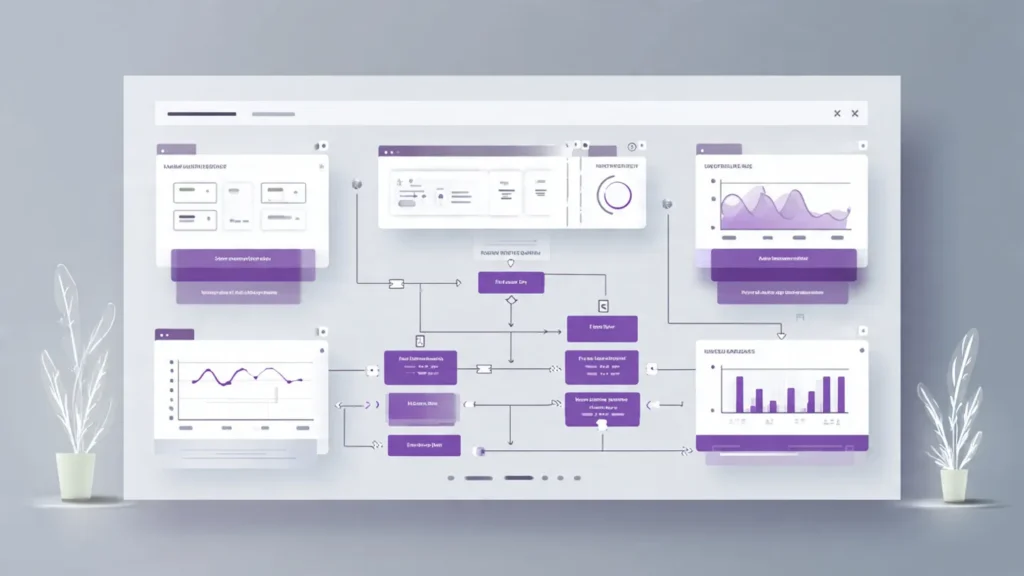
Clear stages provide consistency, training frameworks, and forecasting capability. Typical B2B stages include:
Prospecting/Lead Generation (0%): Identifying potential customers. Cold outreach, referrals, marketing-generated leads. Probability: 0% (not yet qualified opportunity).
Initial Contact/Discovery (10-20%): First meaningful conversation. Understanding situation, challenges, and fit. Probability: 10-20%.
Qualification (25-35%): BANT confirmed. Genuine opportunity with defined need, budget, authority, and timeline. Probability: 25-35%.
Needs Analysis/Solution Design (40-50%): Deep dive into requirements. Crafting tailored solutions. Probability: 40-50%.
Proposal/Quote (60-70%): Formal proposal presented. Pricing disclosed. Terms discussed. Probability: 60-70%.
Negotiation (75-85%): Final details worked out. Objections addressed. Terms finalized. Probability: 75-85%.
Closing (90-95%): Contracts signed or verbal commitment received. Implementation pending. Probability: 90-95%.
Won (100%): Deal closed. Customer onboarded. Probability: 100%.
Stage definitions should reflect your actual sales process. Service businesses might have different stages than product companies. B2C sales compress stages into shorter timeframes.
Each stage should have clear entry criteria (what qualifies opportunity for this stage), exit criteria (what moves to next stage), required activities (what salesperson must do), and expected duration (typical time in this stage).
Sales Process Activities
Each stage requires specific activities ensuring thorough, consistent execution.
Prospecting Activities:
- Research target companies/individuals
- Initial outreach (cold email, calls, LinkedIn)
- Networking event attendance
- Referral requests from existing customers
- Content engagement follow-up
Discovery Activities:
- Initial qualification questions
- Needs assessment conversation
- Stakeholder identification
- Budget discussion
- Timeline establishment
Qualification Activities:
- Detailed needs analysis
- Decision process understanding
- Budget confirmation
- Competition identification
- Success criteria definition
Solution Design Activities:
- Requirements documentation
- Solution design meeting
- Pricing calculation
- Proposal preparation
- Internal approval (if needed)
Proposal Activities:
- Proposal presentation
- Questions and clarifications
- Objection handling
- Next steps agreement
Negotiation Activities:
- Terms discussion
- Pricing adjustments (if appropriate)
- Contract review
- Legal/procurement liaison
Closing Activities:
- Contract preparation
- Signature collection
- Payment processing
- Onboarding handoff
Post-Sale Activities:
- Welcome communication
- Onboarding initiation
- Relationship building
- Upsell opportunity identification
Documented activities enable training new salespeople and ensuring consistency across team.
Sales Collateral and Tools
Supporting materials maintain quality and accelerate sales cycles.
Sales Playbooks: Comprehensive guides covering entire sales process—stages, activities, best practices, common objections with responses.
Email Templates: Pre-written sequences for various stages and scenarios. Accelerates outreach while maintaining consistency.
Call Scripts: Not word-for-word readings but structured conversation frameworks ensuring key points coverage.
Discovery Question Banks: Lists of probing questions uncovering needs and qualification information.
Proposal Templates: Standardized formats ensuring complete, professional presentations while allowing customization.
Case Studies: Success stories demonstrating value delivery and results. Industry-specific examples resonate more powerfully.
ROI Calculators: Tools helping prospects quantify value. Particularly effective for B2B sales.
Competitive Battle Cards: Quick references for competing against specific competitors. Key differentiators and response to common competitor claims.
Objection Handling Guides: Common objections with tested responses. Reduces improvisation and improves consistency.
Testimonials and References: Social proof from satisfied customers. Video testimonials especially powerful.
At Clever Marketing, we developed complete sales collateral suite for a Moroccan training company. Templates, scripts, and case studies reduced new salesperson ramp-up from 4 months to 6 weeks while improving overall conversion rates by 34%.
Pipeline Management and Forecasting
Pipeline—collection of all active sales opportunities—determines future revenue. Effective pipeline management enables accurate forecasting and proactive issue identification.
Pipeline Health Metrics
Healthy pipelines exhibit specific characteristics:
Sufficient Volume: Pipeline value should be 3-5x revenue target. If monthly target is 500,000 MAD, pipeline should contain 1.5-2.5 million MAD in opportunities.
Balanced Stage Distribution: Opportunities distributed across stages. Pipelines weighted heavily toward early or late stages indicate problems.
Appropriate Aging: Deals shouldn’t stagnate. Opportunities spending excessive time in single stages signal stalled sales or poor qualification.
Conversion Rates: Historical conversion rates between stages enable realistic forecasting. If qualification to proposal converts 60%, that’s your baseline assumption.
Velocity: Average time from lead to close. Shorter velocity means faster revenue realization and more predictable forecasting.
Forecasting Methodology
Accurate forecasting enables resource planning and target management.
Probability-Weighted Forecasting: Multiply opportunity values by stage probabilities. Qualification stage (30% probability) with 100,000 MAD opportunity contributes 30,000 MAD to forecast. Summing across all opportunities provides total forecast.
Historical Conversion: Analyze actual historical conversion rates between stages. Use real data rather than optimistic assumptions.
Time-Based Forecasting: Consider expected close dates. Opportunities closing this month contribute to monthly forecast. Those closing next quarter don’t.
Conservative vs Aggressive: Conservative forecasts use lower probabilities and longer timelines. Aggressive forecasts assume best-case scenarios. Reality typically falls between.
Forecast Categories:
- Commit: High-confidence deals almost certainly closing (90%+ probability)
- Best Case: Probable deals with decent closure likelihood (60-90%)
- Pipeline: Earlier-stage opportunities with lower probability (25-60%)
- Upside: Long-shot opportunities worth tracking but unlikely near-term (10-25%)
Regular forecast reviews—weekly or bi-weekly—maintain accuracy and enable proactive pipeline building when forecasts fall short of targets.
CRM for Pipeline Management
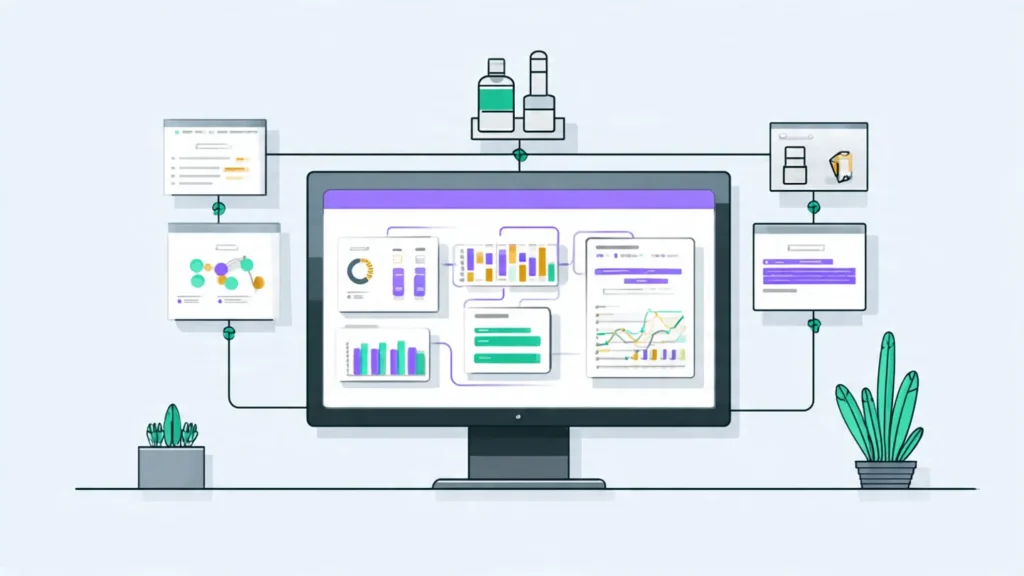
Manual pipeline tracking using spreadsheets fails at scale. CRM systems organize opportunities, track activities, and provide visibility.
Popular CRM options for Moroccan SMEs include HubSpot (user-friendly free tier), Zoho CRM (affordable with robust features), Pipedrive (sales-focused simplicity), Salesforce (enterprise capabilities), and Freshsales (modern interface).
CRM benefits include:
- Centralized opportunity tracking
- Activity history for each prospect
- Automated reminders for follow-ups
- Reporting and analytics
- Team collaboration on deals
- Mobile access for field sales
- Integration with email and calendar
Successful CRM adoption requires mandate from leadership, comprehensive training, and disciplined data entry. Inconsistent usage creates incomplete data undermining system value.
Lead Generation and Qualification
Sales systems require consistent lead flow. Lead generation fills pipeline top enabling downstream conversion.
Inbound Lead Generation
Inbound leads—prospects initiating contact—typically convert better than cold outbound.
Content Marketing: Blog articles, guides, videos addressing prospect challenges. SEO-optimized content attracts searches driving website traffic.
Social Media: LinkedIn for B2B, Instagram/Facebook for B2C. Consistent valuable content builds audiences generating inbound inquiries.
Website Optimization: Clear value propositions, prominent calls-to-action, contact forms, and chat enabling visitor conversion.
Referral Programs: Incentivizing existing customers referring new prospects. Warm introductions convert much better than cold outreach.
Networking Events: Industry conferences, trade shows, and business gatherings generating in-person connections.
Partnerships: Strategic relationships with complementary businesses generating referrals.
Outbound Lead Generation
Proactive outreach supplements inbound, especially for new businesses lacking inbound momentum.
Cold Email: Targeted outreach to ideal customer profiles. Personalized messages referencing specific prospect situations work better than generic blasts.
LinkedIn Outreach: Connection requests followed by value-first messaging. LinkedIn particularly effective for B2B sales.
Cold Calling: Direct phone outreach. Less effective than past but still viable for certain industries and markets.
Direct Mail: Physical mailings standing out in digital-dominated world. Higher costs but potentially higher response for right audiences.
Account-Based Marketing: Concentrated efforts on specific high-value target accounts with personalized multi-channel outreach.
Qualification Process
Not all leads deserve equal pursuit. Systematic qualification allocates resources effectively.
Initial Screening: Basic qualification via form submissions or brief conversations. Confirms basic fit before deeper investment.
Discovery Call: Structured conversation assessing BANT criteria while building rapport and understanding situation.
Opportunity Scoring: Numerical scoring based on qualification criteria. Scores above threshold become active opportunities. Below threshold enter nurture or disqualification.
Disqualification Criteria: Clear standards for when to walk away. Wrong industry, insufficient budget, no decision authority, unrealistic timeline, or poor value fit.
Many Moroccan salespeople resist disqualification, believing persistence overcomes any obstacle. However, time is finite—hours spent on poor-fit prospects cannot be spent on high-potential ones. Disciplined qualification improves overall conversion rates and revenue per hour invested.
Objection Handling and Closing Techniques
Objections indicate engagement. Systematic objection handling converts concerns into commitments.
Common Objection Types
Understanding objection categories enables appropriate responses:
Price Objections: “Too expensive” or “Can’t afford it.” Often value perception rather than true budget constraint.
Timing Objections: “Not right now” or “Will think about it.” May indicate low urgency or hidden concerns.
Authority Objections: “Need to check with…” indicating you haven’t reached decision-maker.
Need Objections: “Not sure we need this” suggesting insufficient problem understanding or poor fit.
Competition Objections: “Considering other options” requiring differentiation and competitive positioning.
Trust Objections: “Never heard of you” or “How do I know you’ll deliver?” requiring credibility building.
Objection Handling Framework
Systematic approach converts objections into closes:
Listen Fully: Don’t interrupt. Let prospect completely express concern. Often talking through objection diminishes it.
Acknowledge: Validate concern showing understanding. “I understand budget is important consideration” demonstrates empathy.
Clarify: Ask clarifying questions understanding root concern. “Too expensive” might mean “Can’t see value justifying cost” rather than absolute budget lack.
Respond: Address concern directly with relevant information, examples, or alternatives.
Confirm Resolution: “Does that address your concern?” ensures objection truly handled rather than superficially dismissed.
Move Forward: After handling objection, move toward next step rather than dwelling on concern.
Price Objection Responses:
- Break down to smaller units (monthly vs annual, per employee, per transaction)
- Compare to alternatives including do-nothing cost
- ROI demonstration showing value exceeds cost
- Payment plans reducing immediate commitment
- Success stories demonstrating value delivery
Timing Objection Responses:
- Create urgency through limited-time offers, seasonal factors, or problem cost
- Understand real concern—often timing objection masks other hesitations
- Propose pilot or limited engagement reducing commitment
- Schedule specific follow-up date rather than vague “later”
Closing Techniques
Closing converts interest into commitment. Various techniques suit different situations:
Assumptive Close: Proceed as if decision made. “When should we schedule kickoff meeting?” assumes yes while making next step concrete.
Alternative Close: Offer two positive options. “Would Tuesday or Thursday work better for setup?” Both assume yes, question is just timing.
Trial Close: Test readiness without full commitment. “How does this sound so far?” gauges temperature enabling issue address before full ask.
Summary Close: Recap benefits and value discussed, then ask for business. Reinforces value before request.
Direct Close: Simply ask. “Shall we move forward?” Straightforward and respectful.
Urgency Close: Limited-time offer creating motivation. “Special pricing expires Friday” or “Only two slots available this quarter.”
Moroccan business culture often values relationship building over aggressive closing. Consultative approaches asking “What makes sense as next step?” respect this while moving sales forward.
At Clever Marketing, we trained objection handling for a Rabat consulting firm whose salespeople often accepted first objection as final answer. Systematic handling framework including role-play practice increased close rates from 18% to 34% within three months.

Sales Team Structure and Management
Scaling sales requires building and managing teams systematically.
Sales Role Definition
Clear roles prevent confusion and enable specialization:
Sales Development Representatives (SDRs): Focus on outbound prospecting and lead qualification. Entry-level role building pipeline for closers.
Account Executives (AEs): Handle qualified opportunities through closing. Experienced salespeople managing complex sales cycles.
Account Managers (AMs): Manage existing customers—retention, expansion, upselling. Different skill set than new business acquisition.
Sales Engineers/Consultants: Technical specialists supporting complex sales requiring deep product/solution expertise.
Sales Operations: Support roles managing CRM, reporting, compensation, territories, and processes.
Small Moroccan SMEs often combine roles due to limited resources. One person might prospect, qualify, close, and manage accounts. As teams grow, specialization improves efficiency—SDRs generate more leads than full-cycle reps could while AEs close more deals without prospecting burden.
Compensation Structure
Sales compensation should align behaviors with business objectives.
Base Salary: Provides stability and attracts talent. Too low causes constant financial stress undermining performance. Too high reduces incentive.
Commission: Variable compensation based on sales results. Incentivizes performance and allows unlimited upside.
Bonuses: Additional rewards for achieving specific goals—quarterly targets, new customer acquisition, territory development.
Common Structures:
- Straight Commission: Pure performance pay. High risk/high reward. Common for mature sales roles.
- Base + Commission: Hybrid providing stability with performance incentive. Most common structure.
- Salary + Bonus: Fixed salary with periodic bonuses for goal achievement. More stable than commission.
Commission Rates: Typically 5-15% of revenue for B2B, varying by deal size, margin, and sales cycle length. Higher commission rates for new business vs account management.
Accelerators: Higher commission rates above quota. If quota is 100,000 MAD monthly and rep hits 150,000, compensation might accelerate on overperformance.
Compensation plans should be simple, clearly documented, and perceived as fair. Complex plans create confusion and disputes undermining motivation.
Sales Metrics and KPIs
What gets measured gets managed. Key sales metrics include:
Activity Metrics:
- Calls made, emails sent, meetings scheduled
- Measure effort and work ethic
- Leading indicators predicting future results
Pipeline Metrics:
- Pipeline value, number of opportunities, stage distribution
- Indicate future revenue potential
- Enable proactive pipeline building
Conversion Metrics:
- Stage-to-stage conversion rates
- Identify bottlenecks and strengths
- Guide coaching and training
Revenue Metrics:
- Closed deals, revenue generated, quota attainment
- Ultimate success measures
- Lagging indicators of past performance
Efficiency Metrics:
- Average deal size, sales cycle length, close rate
- Indicate process effectiveness
- Guide optimization priorities
Customer Metrics:
- Customer satisfaction, retention, referrals
- Long-term value indicators
- Measure beyond initial sale
Individual dashboards showing personal metrics promote accountability and competition. Team dashboards reveal collective performance and trends.
Sales Meetings and Reviews
Regular rhythms maintain focus and accountability:
Daily Huddles (15 minutes): Pipeline updates, immediate challenges, wins celebration. Quick sync maintaining momentum.
Weekly Pipeline Reviews (1 hour): Detailed opportunity discussion. Coaching on specific deals. Forecast updates.
Monthly Performance Reviews (2 hours): Goal progress, win/loss analysis, training needs, strategic adjustments.
Quarterly Business Reviews (Half day): Comprehensive assessment. Territory planning. Compensation review. Major initiatives.
Discipline in meeting cadence prevents reactive drift and maintains strategic alignment.

Sales Training and Development
Ongoing training maintains performance and enables continuous improvement.
Onboarding Process
New salesperson success depends heavily on first 90 days.
Week 1: Orientation
- Company history, culture, values
- Product/service deep-dive
- Market and competition overview
- Systems and tools training
Week 2-4: Shadowing
- Observe experienced reps on calls and meetings
- Listen to recorded calls
- Study proposals and contracts
- Role-play practice
Week 5-8: Guided Selling
- Begin own prospecting with oversight
- Joint calls with managers
- First proposals with review
- Feedback and coaching
Week 9-12: Independent Selling
- Full responsibility with periodic oversight
- Regular check-ins and coaching
- Performance against targets
- Continued training and development
Comprehensive onboarding reduces time-to-productivity and increases long-term success rates.
Ongoing Training
Continuous development maintains skills and addresses changing conditions:
Product Training: Updates on new offerings, features, positioning.
Competitive Intelligence: Market changes, new competitors, updated battle cards.
Skills Development: Objection handling, presentation skills, negotiation tactics.
Process Refinement: Updates to sales process based on learnings and optimization.
Technology Training: New tools or features in existing systems.
Industry Knowledge: Market trends, customer challenges, regulatory changes.
Monthly training sessions, weekly role-plays, and quarterly external workshops maintain sharp capabilities.
Performance Coaching
Individual coaching addresses specific challenges and develops talent:
Call Reviews: Listen to recorded calls providing specific feedback on technique, messaging, and opportunity identification.
Deal Strategy Sessions: Collaborative planning for complex opportunities. Brainstorming approaches, identifying risks, preparing responses.
Pipeline Reviews: Regular one-on-one pipeline examination. Coaching on opportunity qualification, advancement strategies, and resource allocation.
Performance Improvement Plans: Structured support for underperformers. Clear expectations, development resources, accountability checkpoints.
Coaching should be regular, specific, actionable, and balanced—recognizing strengths while addressing development needs.

Frequently Asked Questions
How long does sales system implementation take for Moroccan SMEs?
Basic system implementation—defined process, documented stages, CRM setup—typically requires 6-8 weeks. However, full adoption and optimization takes 4-6 months as teams learn processes, data accumulates, and refinements occur. Rushing implementation creates chaos and resistance. Patience during adoption phase pays long-term dividends. Clever Marketing guides phased implementation matching organizational capacity and change tolerance.
Can small teams (2-3 people) benefit from sales systems?
Absolutely. Systems benefit small teams as much or more than large ones. Clear processes enable consistent quality even with limited resources. Documentation facilitates coverage during vacations or illness. Metrics reveal what’s working enabling focus on highest-leverage activities. Small teams often implement faster than large ones due to fewer coordination challenges. Start simple, add sophistication as capacity grows.
What if our sales process is very relationship-based and consultative?
Systems support rather than replace relationships. Documented processes ensure consistency in relationship-building approaches—discovery questions, follow-up timing, value communication. Many Moroccan businesses view systems as contrary to relationships. In reality, systems free mental capacity from remembering details enabling better relationship focus. CRM organizes relationship history enabling personalized interactions. Structure enhances rather than constrains relationship building.
How do we handle salespeople who resist using CRM and following processes?
Resistance typically stems from unfamiliarity, perceived complexity, or lack of understanding benefits. Address through comprehensive training emphasizing how systems help them (easier job, higher commissions). Make CRM usage mandatory—compensation tied to data entry compliance. Lead by example—leaders must use systems consistently. Provide ongoing support during adoption. Some resistance is inevitable—manage it through clear expectations and accountability rather than hoping for voluntary adoption.
Should we hire experienced salespeople or train from scratch?
Each approach offers advantages. Experienced hires contribute faster but may bring bad habits or resistance to your specific processes. Fresh hires require longer training but learn your system without unlearning previous approaches. Optimal mix often includes experienced leaders/managers and junior team members trained in your methodology. Moroccan sales talent market varies by sector and location. In competitive markets, offering growth opportunities and good systems attracts ambitious talent even without extensive experience.
How do we set realistic sales targets for team members?
Base targets on historical performance, market opportunity, and individual capacity. Analyze past conversion rates and deal sizes establishing baseline expectations. New salespeople need ramped targets—perhaps 50% of full in first quarter, 75% second, 100% third. Targets should be challenging but achievable—demotivating if impossible, insufficient if too easy. Review quarterly adjusting for market changes. Clever Marketing helps establish data-driven targets balancing ambition with realism.
Transform Sales from Art to Science
Sales system Morocco implementation transforms unpredictable founder-dependent revenue into repeatable, scalable processes enabling consistent growth for Moroccan SMEs. Systematic approaches don’t eliminate relationship importance but amplify relationship effectiveness through consistency and measurability.
The difference between plateauing businesses and scaling ones often comes down to sales system maturity. Companies with documented processes, clear metrics, and trained teams grow predictably while those relying on founder heroics hit inevitable capacity ceilings.
At Clever Marketing, we specialize in sales system implementation for Moroccan SMEs. Our comprehensive approach covers process design, CRM implementation, team training, and ongoing optimization delivering measurable revenue improvements.
We’ve helped over 80 Moroccan businesses build systematic sales capabilities, consistently achieving 120-280% revenue increases within 12-18 months through disciplined execution.
Build Your Predictable Revenue Engine Today
Don’t remain dependent on founder sales heroics and referral luck. Systematic sales processes deliver consistent, scalable revenue growth.
Contact Clever Marketing for a free sales system assessment. We’ll analyze your current approach, identify improvement opportunities, and create a customized implementation roadmap.
WhatsApp: +212 6 60 00 34 66 | Response within 2 hours
For many SMEs in Morocco, revenue growth still depends on inconsistent deals, manual follow-ups, and unpredictable sales cycles. In 2025, sustainable growth requires more than effort — it requires a structured sales system that consistently turns leads into paying customers.
A high-performing sales system in Morocco must align lead qualification, follow-up processes, CRM automation, and performance tracking into a repeatable revenue engine. Without clear pipelines, defined stages, and measurable KPIs, even strong marketing efforts fail to deliver predictable results.
At Clever Marketing, we help Moroccan SMEs build sales systems designed for predictability and scale. By structuring pipelines, automating follow-ups, improving lead handling, and aligning sales with marketing, we enable businesses to close more deals, shorten sales cycles, and generate reliable revenue month after month.
Contact Clever Marketing Fes: 📞 +212 532 166 717
📍 N° 19 4ème Etage, Bueaux Al Wafaa Route Sefrou, Fes
👉 clevermkt.com/contact
💬 WhatsApp for quick help.
Schedule your free consultation and discover how systematic sales processes can transform your revenue predictability and growth trajectory. Let’s build your sales system together.
Related Reading:
For a practical, Morocco-focused roadmap to sustainable expansion, explore our pillar guide: Business Growth Morocco 2025: Build Scalable Systems That Work.
This in-depth article breaks down the systems, structures, and execution frameworks Moroccan businesses need to scale profitably in 2025—covering operations, marketing, sales alignment, and leadership models built for long-term growth.